
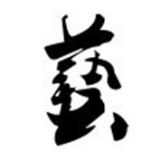
Gao Mingzhu, born in August 1952, with the courtesy name Jingzhi and the courtesy name Xunjingzhai, was originally from Dengzhou, Henan. He resided in Beijing and is a member of the Communist Party of China. He is a Mao style calligrapher, poet, master of traditional Chinese culture, and a century old master. He was awarded the "Five One Project" award. I am currently serving as the Chairman of the Calligraphy Organizing Committee of the China Calligraphy and Painting Research Center, the President of the International Intangible Culture and Art Promotion Association, and the Chairman of the National Calligraphy and Painting Art Committee. I have been appointed as the Art Advisor of the New Era Cultural and Art Talent Center by the China Federation of Literary and Art Circles and the Cultural and Art Talent Center of the Ministry of Culture. I am currently the Art Advisor of the Social Art Professional Committee of the China Oriental Culture Research Association, the Advisor of the China Traditional Culture Development Committee, the Advisor of the China Maoti Calligraphers Association, the Vice President of the China Hanlin Calligraphy and Painting Academy, the Chief Expert of the National Art Title Examination Center, the Honorary Dean of the Central Academy of Fine Arts Calligraphy and Painting, the Visiting Professor of the Calligraphy Department of the Central Academy of Fine Arts, the Director of the China Popular Literature and Art Research Researcher at Forbes Research Institute. Inheritor of China's Intangible Cultural Heritage, Ambassador of China's State Guest Ceremony, Grandmaster of Chinese art genres, and designer of the "Lanting Gaoming Pillar" font. Create the first batch of Chinese cultural celebrity studios: Gao Mingzhu Studio and Gao Mingzhu Art Museum. Awarded: Son of the East, First Generation Founder, People's Artist, Top Ten People's Art Masters, Top Ten Contemporary Chinese Artists with Both Virtue and Art, Top Ten Contemporary Chinese Cultural Scholars, with a Master's degree in Calligraphy Art and a PhD in Art from the Royal Academy of Fine Arts in France. He has won the Academic Award of Chinese Literature and Art Circles, and the Lifetime Achievement Award of Chinese Culture and Art Festival: Golden Monkey Award, Golden Rooster Award Award, and Golden Dog Award. He has published such albums as Collected Calligraphy of Gao Mingzhu, Artist · Gao Mingzhu, Collected Works of National Artist Gao Mingzhu, Image Ambassador of Chinese State Guests · Gao Mingzhu, Art Appreciation of a Generation of Fangjia · Gao Mingzhu, the Belt and Road Summit Forum · Famous Calligrapher Gao Mingzhu, Calligraphy Collection of Famous Chinese Modern Artists, Collected Works of Gao Mingzhu, a famous national artist in art collection, Collected Works of Famous Chinese Modern Calligraphers and Painters, and Collected Works of Famous Chinese Modern Calligraphers and Painters.
Mr. Gao Mingzhu was influenced and nurtured by his ancestors, and has been fond of calligraphy and poetry since childhood. He graduated from Henan Calligraphy Correspondence Academy and the China Calligraphy Association Calligraphy Training Center Training Class. In the early 1960s, he started writing and learning regular script, in the 1970s, he studied clerical script, seal script, and Chairman Mao's handwritten poetry. In the 1980s, he began learning Wang Xizhi's calligraphy and the calligraphy of famous calligraphers throughout history. He worked silently for decades and never stopped at Linchi. In the process of creation, he is good at drawing on the experience and essence of art of predecessors, advocates that art comes from life, excavates materials from ordinary life, and is good at observing, thinking, refining, sublimating, and obtaining creative inspiration. He learns from the past, is bold in innovation, and after repeated tempering, he has gradually formed an artistic style of rounded pen, smooth lines, natural and elegant, and created a large number of outstanding works that are praised by people. Highly praised by older generation artists such as Fan Zeng, Ouyang Zhongshi, and Zhang Hai. Mr. Fan Zeng mentioned during the opening ceremony of the National Studies program at Renmin University that Gao Mingzhu was "writing with care" and was gifted with the title "poetry and books are all excellent". Mr. Quan Xijun wrote in the preface of Gao Mingzhu's Da Hongpao album: "From the perspective of brushstrokes, ink use, layout, and organization, Mr. Gao Mingzhu's calligraphy is rigorous but not rigid, agile but not messy, with free and unrestrained brushwork, and a long and soft ancient charm. The brushstrokes are diverse, free and elegant, with both rich and vigorous energy and gentle and elegant charm. It is inherited and passed down between the lines, and new and innovative beyond the law. It truly achieves the unity of ideological, artistic, and ornamental qualities, with both virtue and artistry. It has already possessed the style of a master and can be used for others." "The improvement of calligrapher's creation provides useful insights that can be used for reference." Mr. Ouyang Zhongshi also insightfully commented on his Gao Mingzhu's calligraphy: "Looking at his calligraphy works comprehensively, they make people feel new and not thin, just like the 'Hongtu Guoyun'." In terms of beauty, a complete work does not lose its charm, and a few word work does not lose its grandeur. It combines softness and hardness, showcasing both strength and beauty, with flesh and blood full and a natural structure. Learn from the past without sticking to it, seek novelty without seeking favor. This was forged in the heart and written by many ancient people, integrating the strengths of a hundred schools of thought into himself The calligrapher Gao Mingzhu, who draws on the strengths of others, combines the wild and unrestrained style of cursive brushwork with the charm of the two kings, and captures the brushwork of the Minan Palace. His brushwork is free and unrestrained, lively and agile, with an ancient charm that combines strength and softness. He is both refined and popular, creating a new generation of cursive style. Calligraphy directly incorporates all natural phenomena into the book, with a grand and unique craftsmanship. Its works are open and closed without losing solemnity and elegance, elegant and elegant without losing richness and stability, and enjoyable without losing the rules and regulations. It can be said that stillness is embedded in motion, using stillness to move, stillness to move beauty, and stillness to move beauty. The motive is still and lively, with infinite charm, strong and tranquility, extraordinary grace, and beauty, with a rolling wind and clouds flowing for thousands of miles, forming a whole. Contemporary critic Mr. Yushan praised the calligraphy of Gao Mingzhu, saying: "Gao Mingzhu's cursive script takes the bold and unrestrained style of the hair, blends the strength of the two kings, captures the dominance of the Minan Palace, and has a graceful and smooth style with a free and natural style. The strokes are outstanding, with ink lines turning inward and outward, opening and closing wide, exposing the front to stretch its spirit, and concealing the front to wrap its momentum. The characters may be slanted, reflected, bowed, turned back, tilted, and staggered, connecting the head and tail, echoing up and down, arranged vertically and horizontally, with a full flow of energy, unstoppable throughout the article." And it is continuous, like a river flowing around a fragrant meadow, flowing freely. The brushstrokes are swift and swift, like thunder and lightning dancing, wind and clouds sweeping away. The characters leap like dragons and tigers, startle snakes into the grass, birds into the forest, and the pen is drawn back without hesitation. Outside the weeding book, Gao Mingzhu's running script is thick and rich, with a fresh style. The strokes of the characters and strokes follow the tradition and are novel and unique, presenting the beauty of clear and elegant, elegant and simple, and ancient Shao Xiu. People's Art Network commented on Gao Mingzhu's calligraphy in a report titled "Appreciation of People's Artist Gao Mingzhu's Calligraphy": "Mr. Gao Mingzhu's works use a coherent method of martial arts, with a large amount of vigorous ink, like wind and electricity, written in one stroke. The use of ink in each stroke is confusing, but only after concentrating and gathering energy can one realize the power of its fixed form. Mr. Gao's brushstrokes are powerful, the fonts are vigorous and dynamic, and the shapes are wide and rhythmic, which can express a broad minded moral cultivation. First, look at the overall feeling of the work, then at the details and characteristics, changes in the structure, exaggeration of the structure, and appropriate concentration and lightness, making the visual impact appear." More rhythmic and rhythmic changes. Mr. Gao Mingzhu's works reflect the deep foundation of his calligraphy, showcasing the literary elegance of his calligraphy. The harmonious combination of temperament and law creates an exquisite brilliance. The gentleman is elegant but not shallow, showing tension away from light and thin, with methods and moderation, free and flowing, as elegant as clouds and smoke, quite pleasing to the eye. There is a unique expression of thickness and depth, with words that can protrude and fill the paper surface, providing a great sense of spatial texture! This is a calligraphy spectacle that combines sensibility and rationality. Such calligraphy works can decorate the barriers of countless families and become a witness to the master's praise and reputation in the literary world
Teacher Gao Mingzhu was one of the top ten calligraphy artists in China in 2008, one of the top ten moving artists in China in 2009, and one of the top ten most popular online artists in China in 2011. In 2012, CCTV Pioneer China Vanguard Reception Hall gave a 30 minute special report titled "The Son of the East: Gao Mingzhu"; In 2013, to commemorate the 120th anniversary of Chairman Mao's birth, 120 calligraphy works were successfully exhibited at the World Art Museum of the Chinese Century Altar, with a 20 minute special report on the dialogue column between famous artists; In 2015, Tianjin People's Fine Arts Publishing House published and distributed 2000 copies of Gao Mingzhu's Da Hongpao album, a collection of Chinese modern and contemporary calligraphers, distributed by Xinhua Bookstore nationwide. Was awarded the title of "China Intangible Cultural Heritage Publication" by the China Intangible Cultural Heritage Office and was awarded the title of "China Intangible Cultural Heritage Inheritor" by Gao Mingzhu; The China Intangible Cultural Heritage Art Committee named "Gao Mingzhu Da Hongpao Famous Artists Studio" after the "Collection of Calligraphy by Famous Chinese Modern and Contemporary Masters"; In 2017, the Gu Yun Jin Tan program of Guangdong Radio and Television Station gave a special report titled "Famous Chinese Calligrapher Gao Mingzhu"; In 2018, calligraphy works were presented as a national gift to the collection of the Prime Minister's Office of the Kyrgyz Republic. A 10 minute special report titled "Inheriting the Charm of the ancients and Opening up a New Era" was conducted by Gao Mingzhu in the column "Inheriting the Ancient and Creating the Present" of the People's Daily; In 2019, the qualification certification of the Art Development Center of the Ministry of Culture was "Contemporary Famous Calligrapher". The Professional Art Committee of the National Studies Culture and Art Center decided to officially award Gao Mingzhu as "National Studies Master". In 2020, Xinhua News Agency reported on the famous Chinese calligrapher Gao Mingzhu, titled "The font flies, inherits the charm of the ancients, the lines flow smoothly, and opens up a new trend of the times"; In 2021, the calligraphy works of Gao Mingzhu were registered by the National Copyright Administration. The Lanting Font Library Project Working Committee decided to include the font of Gao Mingzhu in the Lanting Font Library and name it "Lanting · Gao Mingzhu Body"; On December 18, 2022, Gao Mingzhu's calligraphy works "The Great Wall" and "Ode to the Long March" were reviewed by the editorial committee and respectively included in the National Cultural Park Theme Album for the Great Wall and the Long March; In January 2024, he served as a visiting professor at the Calligraphy Department of the Central Academy of Fine Arts, and his calligraphy work Mao Zedong Qinyuan Spring Snow won the Excellent Work Award of the 16th "Five One Project" for spiritual civilization construction.
Mao Zedong's calligraphy work "Spring in Qinyuan, Snow" is engraved on the New Great Wall of Badaling in China. The works are included in "Decision China Network · Chinese Influential Figures Database", "China in Art", "Memory of the Republic · Art Chapter", "Era · New Flag", "Yearbook of the People's Republic of China", "Yearbook of Chinese Art", "Selected Works of Chinese Art", "Biographies of Artists", "Cultural Monthly", "Art Life", "Centennial Master", "Giant in the Book Industry", "Never Forget My Original Aspiration", "Impression of Hong Kong", "Collection of the Forbidden City", "People's Art", "People's Artists", "Art Inheritance", "Great Masters of the Country", "Gold Medal Artists", "Masters of Chinese Rites Art", "History of Contemporary Calligraphy in China", "Masters of Chinese Art Schools", "Treasures of Chinese Art", "Contemporary" Hand "," Touching the World's Art Masters "," Inheriting Classics: Master Style "," Art Inheritance: Appreciation of Chinese Famous Calligraphy and Painting Works " "Appreciation of the Nine Famous Artists of the One Generation Fang Family", "World Hall level Art Masters: Twenty Hall level Artists that Children should Know in Their Lifetime", "Complete Collection of Chinese Inherited Poetry, Calligraphy and Painting", "Collection of Chinese Art Saint Qigong and Gao Mingzhu", "National Cultural Park Theme Album - Precious Collection Edition", "Academicians of Great Powers - Famous Calligraphy Academicians of New China", "New China Poetry Encyclopedia", "New China Poetry and Ci 300 Schools", "New China Guoxue 300 Schools", "Striving to Create the Peak of Literature and Art in the New Era - Excellent Art Works of the 16th" Five One Project "for Spiritual Civilization Construction", etc. ".
高明柱诗
五律·长城
巍巍万里城,
浩浩似飞龙。
起伏千秋耸,
蜿蜒百代功。
尾连东海水,
头枕北祁峰。
古战防边敌,
于今举世崇。
有一种文化,叫挥毫泼墨,有一种光芒,叫家国情怀。长城精神百年历程,栉风沐雨,无数爱国人士为了信仰、理想前仆后继。
There is a culture called splashing ink with a brush, and there is a radiance called patriotism. The spirit of the Great Wall has gone through a hundred years of ups and downs, and countless patriots have followed suit for their beliefs and ideals.
“今天,我们用两岸书画家的大作、新作来纪念历久弥新的艺术精神,为推动两岸友好向前发展,推动祖国的统一大业做出一份贡献。”
"Today, we use the masterpieces and new works of calligraphers and painters from both sides of the Taiwan Strait to commemorate the enduring spirit of art, and make a contribution to promoting the development of cross-strait relations and the great cause of national reunification."
“中华文化历经五千载依旧能源源不断焕发青春,根源在于传承。当前的两岸交流虽然受阻,但我们还是要通过各种方式,让台湾青年了解、喜爱我们同根同源的中华传统文化。”
After five thousand years, Chinese culture has continued to rejuvenate with its energy source, rooted in its inheritance.Although current cross-strait exchanges are hindered, we still need to use various means to let Taiwanese youth understand and love our traditional Chinese culture, which is of the same origin and origin
两岸‘和衷共济•共襄盛举,共叙情谊,“一部长城史,就是中华民族的团结、奋斗、互助的发展史。它见证了中华民族由苦难走向辉煌,目睹了中华大地由贫瘠走向富裕,也必将看到中华儿女迈向祖国和平统一、民族伟大复兴的光辉前景。”
"The history of the Great Wall is the development history of the unity, struggle, and mutual assistance of the Chinese nation. It witnesses the Chinese nation's journey from suffering to glory, the land of China from poverty to prosperity, and will also see the glorious prospects of the Chinese people moving towards peaceful reunification and great national rejuvenation."
巍巍长城矗立,岁月长河悠悠。
The majestic Great Wall stands tall, and the river of time flows long.
千年前一统天下的秦始皇,将断续修建的防御工事连接完整,用以抵抗来自北方的侵略。长城是中华民族的脊梁,在文化、艺术、战略上都有独特的重要性。
L'empereur QIN Shihuang, qui était sous le ciel il y a un millier d'années, a relié les fortifications construites par intermittence pour résister à l'agression du Nord. La Grande Muraille est la colonne vertébrale de la nation chinoise et a une importance unique dans la culture, l'art et la stratégie.
长城所代表的就是中华民族的精神,是中国人的根脉。忆往昔,巍峨长城千年屹立,黄埔百年风雨峥嵘;看今朝,两岸同胞携手共进,民族复兴前景光明。
The Great Wall represents the spirit of the Chinese nation and the root of the Chinese people. Recalling the past, the towering Great Wall has stood tall for a thousand years, and Huangpu has experienced ups and downs for a hundred years; Looking at the present day, compatriots on both sides of the Taiwan Strait are working hand in hand to advance, and the prospects for national rejuvenation are bright.
无论风云如何变幻,长城精神始终是中华民族的不朽丰碑,指引着中华民族走向和平统一。
No matter how the situation changes, the spirit of the Great Wall has always been an immortal monument of the Chinese nation, guiding it towards peaceful reunification.




热门跟贴