


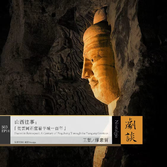
《演变中的自治》当代绘画的媒介、思想与方法敦煌特展
Autonomy in Evolution: Media, Thought, and Method in Contemporary Painting — A Special Exhibition at Dunhuang
策 展 张 涛
General Director Zhang Tao
学术主持 尤 洋
Academic Chair You Yang
参展艺术家
Participating Artists
段建伟 (忻东旺) 钟飙 王兴杰
秦琦 熊莉钧 黄宇兴 张春华 杨悦 彭斯
宋元元 李芃澎 雷波 赵赵 马文婷 贺勋
张观鹿 但文杰 冷广敏 杨扬 郭隆耀 鲁桔诵 张恺童
李双强 刘溪子 罗然 刘阳 卜實 陈国宝
王一帆 张仁杰 方贤晨 鲁鲁
朱钇名 王珊 郭兆霖
Duan Jianwei (Xin Dongwang) Zhong Biao Wang Xingjie
Qin Qi Xiong Lijun Huang Yuxing Zhang Chunhua Yang Yue Peng Si
Song Yuanyuan Li Pengpeng Lei Bo Zhao Zhao Ma Wenting He Xun
Zhang Guanlu Dan Wenjie Leng Guangmin Yang Yang Guo Longyao Lu Jusong Zhang Kaitong
Li Shuangqiang Liu Xizi Luo Ran Liu Yang Bu Shi Chen Guobao
Wang Yifan Zhang Renjie Fang Xianchen Lu Lu
Zhu Yiming Wang Shan Guo Zhaolin
开 幕 2026.6.16 10:30
Opening 2026.6.16 10:30
展 期 2026.6.16 - 2026.7.28
Duration 2026.6.16 - 2026.7.28
主 办 艺术粮仓
Organizer Art Granary
联合主办 南京艺术学院美术馆
Co-organizer Art Museum of Nanjing University of the Arts
支持单位 Support Units
X 美术馆
X Museum
敦煌市文博会展事务中心
Dunhuang Cultural Expo Exhibition Affairs Center
敦煌文博投资有限公司
Dunhuang Cultural Expo Investment Co., Ltd.
展览总监 董钢
Exhibition Director Dong Gang
策展助理 刘坤 张绫绮
Curatorial Assistant Liu Kun Zhang Lingqi
展览统筹 何雨洁 孙崇宇
Exhibition Coordinator He Yujie Sun Chongyu
海报设计 刘阳
Poster Designer Liu Yang
地址 Address
敦煌国际会展中心c馆2层
Dunhuang International Convention and Exhibition Center, Hall C, 2nd Floor
前言
文/张涛
在当下的艺术展览,我们似乎已经习惯了一种叙事:装置占据着展厅的中心,影像在暗室中循环播放,行为成为开幕式的焦点,新媒体艺术不断宣告着技术与观念的最新突破。与之相比,架上绘画——这一曾经贯穿古典与现代主义时期的“核心媒介”——显得安静,甚至有些“不合时宜”。
本展览无意对这一声音做出简单的反驳,而是希望提出另一种观察:绘画非但没有缺席,反而在一场深刻的自我更新中,找到了属于自己的位置。它不再试图争夺叙事的中心,而是构建了一套自足的语言体系,以其不可替代的质感、温度与在场感,参与着当代艺术的多元对话。
这并非一种怀旧的姿态,也不是对“传统媒介”的保守捍卫。恰恰相反,当代绘画正在多个方向上同时展开着充满活力的探索,呈现出几种相互交织的路径。
在图像泛滥的时代重新定义观看。我们生活在一个图像过量的时代。屏幕中的影像不断生成、流动、消失,视觉经验被前所未有的速度所塑造。在这样的语境下,绘画与图像的关系变得尤为复杂。
一些艺术家选择拥抱图像,将摄影、广告、网络截图转化为绘画的语言。但他们的工作并非简单的复制,而是通过绘画特有的“时间性”——一笔一划的缓慢构建、色彩的反复推敲、质感的层层叠加——为快速流转的图像赋予了一种不同的存在方式。当一幅画作在画布上被反复涂抹、刮擦、重绘,它所承载的便不再是一则“信息”,而是一段时间的沉积。
另一些艺术家则选择与图像保持距离,回归到更为直接的视觉经验之中。他们画眼前的事物、记忆中的风景、身体与空间的关系,试图在图像泛滥的时代,重建一种更为朴素、更为真诚的观看方式。这些作品提醒我们:在算法生成图像的今天,人的眼睛依然拥有不可替代的温度。
在多元文化中寻找坐标。绘画从来不是孤立的技术实践,它总是与特定的文化土壤、历史记忆、精神传统紧密相连。在今天这个高度流动的世界里,艺术家们对自身的文化坐标变得更加自觉。这种自觉,并非简单的“回归传统”。当代艺术家面对传统的方式,往往是充满张力与创造性的——他们从古老的东方精神中汲取养分,却以当代的语言重新表达;他们关注地域性的材料与技艺,却将其置于全球性的视野之中;他们回望历史,却始终保持着与现实对话的敏感。
在短视频、信息碎片化潮涌的时代,绘画成为了一种连接地方与世界、传统与当下的媒介。它以其与具体文化土壤的深度关联,提供了一种在趋同压力下依然保持差异性的可能。每一幅画作背后,都隐约可见一条文化脉络的延续与演变。
物质性的回归与身体经验。在虚拟现实的日益扩张、数字界面成为主要观看方式的今天,绘画的物质性获得了前所未有的意义。它正在经历一场深刻的演变。它的语言在扩展,它的边界在移动,它的可能性在增加。然而,在这演变之中,绘画始终保持着某种“自治”——它不是被动的接受者,而是主动的转化者。
绘画吸收互联网的图像资源,却赋予它们物质性的锚点;绘画面对AI的挑战,却更加清晰地确认了人的价值;绘画借鉴游戏的空间叙事,却发展出属于自己的观看方式;绘画对话动漫的平面美学,却坚持着物质与时间的沉积。这种“自治”,不是封闭与保守,而是在开放中保持自身。它意味着绘画能够在与其他媒介的对话中,不断重新发现自己,不断确认那些不可替代的部分。就像敦煌的壁画,千年来经历了自然的侵蚀、人为的破坏、技术的介入,却依然以其独特的方式存在着,诉说着绘画这一古老媒介的坚韧与可能。
在敦煌,我们或许能够以更长的尺度来思考绘画的命运。那些画工没有名字留下,他们的工具早已消失,他们生活的世界也已远去。但他们留下的笔触依然在诉说,那些色彩依然在呼吸,那些形象依然在感动着千年之后的观看者。
媒介会演变,技术会更新,但有些东西是持久的——人对表达的渴望,手与物质的对话,目光在画面上的停留。绘画之所以能够穿越千年,不是因为它的技术多么先进,而是因为它承载着这些最朴素、最持久的人类经验。
今天的绘画,正在经历新的演变。互联网、AI、游戏、动漫,这些新兴的媒介与语言,正在丰富着绘画的可能性,也在促使绘画重新思考自身的本质。这不是一场危机,而是一次机遇——一次重新发现自己、重新定义自己。演变中的绘画,依然保持着它的自治。不是因为它与世隔绝,而是因为它知道:在一切变化之中,有些价值是值得守护的——那些关于手的记忆、关于时间的沉积、关于目光的停留、关于人的存在。
在敦煌,面对千年壁画,我们看到的不仅是过去,也是未来。绘画的故事还在继续,而我们有幸成为这个故事的见证者。
本展览试图呈现的,正是这种演变中的自治。它不是对过去的怀旧,也不是对未来的预言,而是对当下的凝视——在媒介交汇的时代,绘画如何保持自身,又如何在演变中生长。
今天,当我们将“当代绘画”置于敦煌这一特殊的场域,当我们面对一个被互联网、人工智能、游戏与动漫深刻重塑的视觉世界,绘画正在经历一场前所未有的演变。它不再是封闭的、自足的语言系统,而是在与新兴媒介的碰撞中,不断重新定义自身的边界与可能。
这,正是“演变中的自治”所要探讨的命题。
Foreword
By Zhang Tao
In contemporary art exhibitions today, we seem to have grown accustomed to a particular narrative: installations occupy the center of the exhibition hall, videos loop endlessly in darkened rooms, performance art becomes the focal point of opening ceremonies, and new media art continually announces the latest breakthroughs in technology and concept. By comparison, easel painting—the "core medium" that once spanned the classical and modernist periods—appears subdued, even somewhat "out of step with the times."
This exhibition does not seek to offer a simple rebuttal to such perceptions. Rather, it aims to propose an alternative observation: painting has not receded into absence; instead, through a profound process of self-renewal, it has found its own distinctive place. It no longer vies for the center of the narrative but has constructed a self-sufficient linguistic system, participating in the pluralistic dialogues of contemporary art through its irreplaceable texture, warmth, and sense of presence.
This is neither a posture of nostalgia nor a conservative defense of a "traditional medium." On the contrary, contemporary painting is simultaneously unfolding dynamic explorations across multiple trajectories, revealing several interwoven paths.
Redefining Vision in an Age of Image Saturation. We inhabit an era of image excess. Visuals on screens ceaselessly generate, circulate, and vanish, shaping visual experience at an unprecedented velocity. In this context, the relationship between painting and the image becomes particularly complex.
Some artists choose to embrace the image, translating photography, advertising, and internet screenshots into the language of painting. Yet their work is far from mere replication. Through painting's inherent "temporality"—the slow accumulation of each brushstroke, the repeated deliberation over color, the layering of textures—they endow swiftly circulating images with a different mode of existence. When a painting is repeatedly applied, scraped, and reworked on canvas, what it carries is no longer mere "information" but the sedimentation of time.
Other artists choose to maintain a distance from the image, returning to a more direct visual experience. They paint the objects before their eyes, landscapes held in memory, the relationship between body and space—striving, in this age of image saturation, to reconstruct a more grounded and sincere mode of seeing. These works remind us: in an era of algorithmically generated images, the human eye still possesses an irreplaceable warmth.
Seeking Coordinates within a Plurality of Cultures. Painting has never been an isolated technical practice; it is always intimately bound to specific cultural soil, historical memory, and spiritual traditions. In today's highly fluid world, artists have become increasingly self-aware regarding their own cultural coordinates. This awareness is not a simplistic "return to tradition." The way contemporary artists engage with tradition is often charged with tension and creativity—they draw nourishment from ancient Eastern sensibilities yet re-articulate them in a contemporary idiom; they attend to regional materials and techniques while situating them within a global perspective; they look back upon history while remaining acutely attuned to dialogues with the present.
In an era overwhelmed by short videos and fragmented information, painting has become a medium connecting the local and the global, tradition and the present. Through its deep entanglement with specific cultural contexts, it offers the possibility of maintaining difference amidst the pressures of homogenization. Behind each painting, the continuation and evolution of a cultural lineage can be faintly discerned.
The Return of Materiality and Corporeal Experience. As virtual reality expands and digital interfaces become the primary mode of seeing, the materiality of painting acquires unprecedented significance. It is undergoing a profound transformation. Its language expands, its boundaries shift, its possibilities multiply. Yet throughout this evolution, painting has maintained a certain "autonomy"—it is not a passive recipient but an active agent of transformation.
Painting absorbs the image resources of the internet but anchors them with materiality. Painting confronts the challenge of AI, yet in doing so, it affirms the value of the human with greater clarity. Painting borrows from the spatial narratives of gaming but develops its own modes of viewing. Painting engages in dialogue with the planar aesthetics of anime and manga while insisting upon the sedimentation of material and time. This "autonomy" is not closure or conservatism but the preservation of selfhood within openness. It means that painting, through its dialogues with other media, can continually rediscover itself and reaffirm those irreplaceable dimensions. Like the murals of Dunhuang, which over a millennium have endured natural erosion, human defacement, and technological intervention, yet persist in their singular manner, testifying to the resilience and potential of this ancient medium.
In Dunhuang, perhaps we are afforded a longer scale by which to contemplate the fate of painting. Those artisans left no names behind; their tools have long vanished; the world they inhabited has receded into the distance. Yet the brushstrokes they left continue to speak, the colors still breathe, the figures still move viewers a thousand years hence.
Media evolve, technologies are renewed, but certain things endure—the human desire for expression, the dialogue between hand and matter, the gaze that lingers upon a surface. Painting's capacity to traverse millennia stems not from technological sophistication but from its embodiment of these most elemental and enduring human experiences.
Today, painting is undergoing a new evolution. The internet, AI, gaming, anime and manga—these emerging media and languages are enriching painting's possibilities while also prompting it to reconsider its own essence. This is not a crisis but an opportunity—a chance to rediscover and redefine itself. Painting in evolution retains its autonomy. Not because it isolates itself from the world, but because it knows: amidst all change, certain values are worth safeguarding—the memory of the hand, the sedimentation of time, the lingering of the gaze, the presence of the human.
At Dunhuang, facing the millennia-old murals, what we see is not only the past but also the future. The story of painting continues, and we are privileged to be witnesses to this story.
What this exhibition endeavors to present is precisely this autonomy in evolution. It is neither nostalgia for the past nor prophecy for the future, but a sustained contemplation of the present—how painting, at the intersection of media, maintains its integrity while growing through transformation.
Today, as we situate "contemporary painting" within the singular context of Dunhuang, and as we confront a visual world profoundly reshaped by the internet, artificial intelligence, gaming, anime, and manga, painting is undergoing an unprecedented evolution. It is no longer a closed, self-sufficient linguistic system but, through its encounters with emerging media, continually redefines its own boundaries and possibilities.
This, precisely, is the proposition that "Autonomy in Evolution" seeks to explore.




热门跟贴