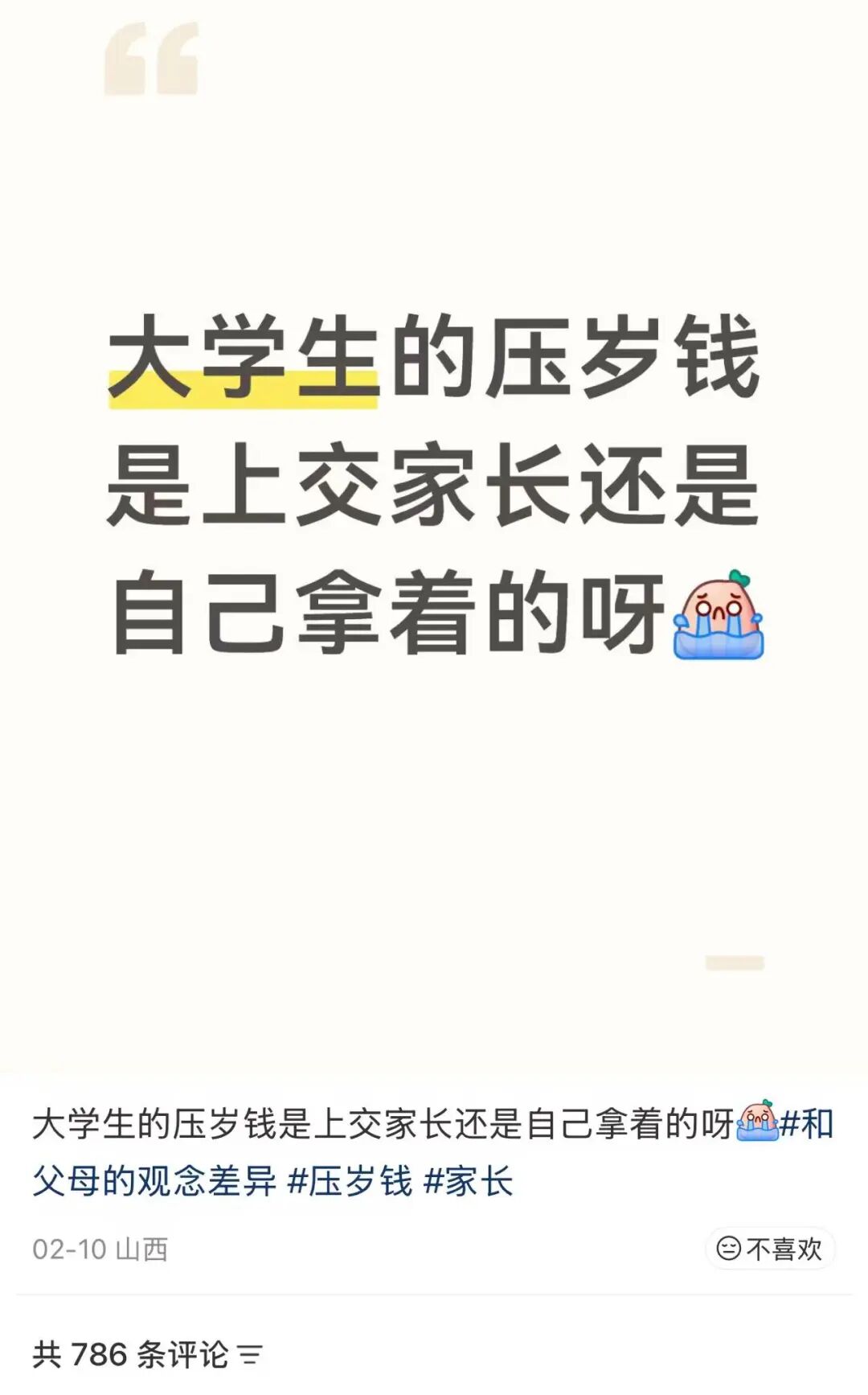
2月20日,话题“妈妈让上交2万压岁钱孩子不干了”冲上微博热搜,引发广泛关注。
A heated discussion has erupted online after a 12-year-old boy refused to hand over his 20,000 yuan ($2,800) in Chinese New Year red envelope money to his mother.
据河南广播电视台民生频道报道,12周岁的小王从长辈处收到2万余元压岁钱。母亲让其上交,表示压岁钱是礼尚往来所得,应交给父母保管使用。但小王认为,压岁钱是长辈给自己的,理应由自己保管并支配,双方由此产生分歧。
According to the report, the mother requested the money, arguing that the cash was essentially a reciprocal exchange from gifts given to other children and should be managed by the parents. The boy, however, insisted the money was a personal gift to him and that he should have the right to control it.
在社交平台上,有关“压岁钱到底归谁管”的帖子,也频频引起热议。

有网友认为,压岁钱都是礼尚往来,理应交由父母。


也有网友认为,让孩子自己掌管压岁钱,更有利于树立正确的消费观。



还有网友建议,可以为孩子办理一张银行卡,专门用来存放压岁钱。


律师:压岁钱所有权归孩子
父母可代管但不能随意用
“压岁钱在法律上属于赠与行为,一旦孩子或监护人接受,钱款发生转移,这笔钱就归未成年子女所有。”山东卓鲁律师事务所董克强律师解释,根据《民法典》,长辈给晚辈发压岁钱,就是一份“赠与合同”。即便在人情往来中,父母同时也给对方孩子压岁钱,这也是两个独立的法律行为,不能相互抵消。“您给别人的,是您的赠与;别人给孩子的,是孩子的合法财产,两者不能混淆。”
However, a child's ability to manage the funds depends on their age. Children under eight are legally unable to make independent decisions about their property, so parents must act as their agents.
那么孩子能随意支配这笔人生中收到的“巨款”吗?董克强律师指出,这取决于孩子的民事行为能力。如果孩子不满八周岁,那么就属于无民事行为能力人。他们无法独立处分财产,必须由法定代理人(父母)代理。如果孩子八周岁以上,属于限制民事行为能力人。他们可以独立实施与其年龄、智力相适应的民事法律行为。
Children older than eight are considered to have limited capacity and can make small purchases, like stationery or books, but significant expenses, such as buying a smartphone or making large online donations, require parental consent.
董律师进一步解释,孩子可以做的比如买文具、买课外书、买小零食。这些小额、日常的消费是合法有效的,而不可以做的,如果孩子想用压岁钱购买昂贵的手机、给网络主播巨额打赏,这些行为超出了其年龄、智力能判断的范围,必须经过父母的同意或追认,否则可能无效。
孩子的压岁钱,父母能不能花?董克强律师结合《民法典》第三十五条给出了解答。“父母作为监护人,有义务帮孩子保管压岁钱,但这不等于拥有所有权,更不意味着可以随意使用。”董克强律师强调,监护的核心原则是 “最有利于被监护人”。
Lawyer Dong Keqiang from Shandong Zhuolu Law Firm clarified that parents, as guardians, are responsible for managing their children's property but do not own it. The legal principle of acting in the "best interests of the minor" applies.
那么什么情况下可以动用这笔钱呢?董克强律师列出了合法使用的场景:“如果是为了孩子的利益,是可以处置的。比如支付孩子的学费、辅导班费用,购买必需的生活用品,支付医疗费等,这些都是为了孩子生存和发展的必要开支。 或者是为了孩子财产的保值增值,比如在征求孩子意见后,将钱存入银行。”他特别提醒,对于年满八周岁的孩子,即使是为了孩子利益的开支,也应充分尊重孩子的意愿。“如果孩子明确反对父母动用这笔钱去做某件事,除非这件事关乎其基本权益,否则监护人不应强行处置。”
This means parents can use the money for the child's benefit, such as paying for school fees, essential living expenses, or medical costs. For significant decisions, especially when the child is over eight, their wishes should be respected.
理财经理建议:打理压岁钱时
应注重孩子的财商教育
某国有银行资深理财经理介绍,每年春节假期结束后,网点都会迎来未成年人专属账户开立、压岁钱定制储蓄业务的办理小高峰,越来越多家长开始重视通过正规渠道打理这笔钱。
上述国有银行资深理财经理建议,家庭在打理孩子压岁钱时,不必过度纠结所有权归属,更应注重过程中的财商教育。家长可结合孩子的年龄特点,采取共同开户、分类记账、按需支配的方式,将压岁钱分为长期储蓄、日常使用、学习支出等不同部分,让孩子亲身参与储蓄、查询、规划的全过程;要注意的是,在选择相关理财产品时,务必警惕“儿童专属=更安全”的误区,部分标注“儿童专属”的产品并非全部保本,尤其是一些儿童专属分红型保险、少儿基金定投等,不属于存款类产品,其收益具有不确定性。
Financial experts suggest that families move beyond the debate over ownership and focus on financial education. A senior relationship manager from a state-owned bank recommended involving children in the process by opening a bank account in their name and dividing the money into categories like long-term savings and daily expenses. This approach helps children learn about saving and managing money, though parents should be cautious about investment products labeled as "for children", as they may not be risk-free.
来源:中国青年报 河南广播电视台民生频道 红星新闻等
跟着China Daily
精读英语新闻
“无痛”学英语,每天20分钟就够!